Global Collaborations Spotlight: A Decade of Partnership Advancing Newborn Care in Rural India
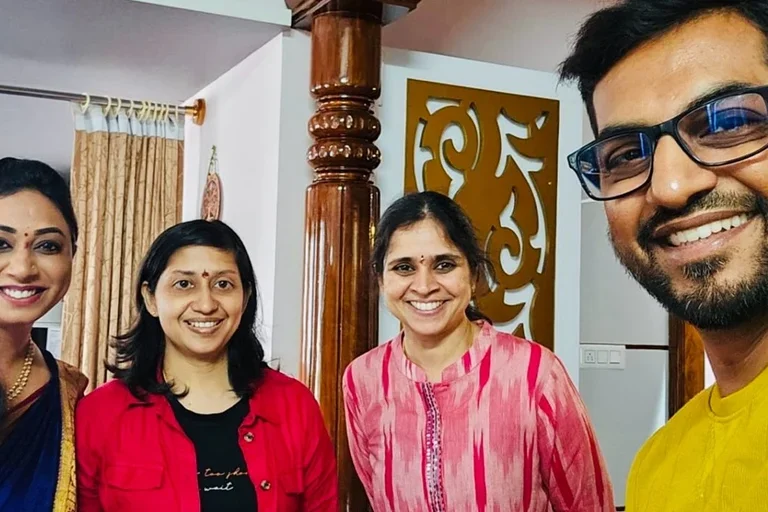
When Dr. Supriya Bavisetty, pediatrician at Olive View-UCLA, first visited Vivekananda Memorial Hospital (VMH) in southern India as a UCLA pediatric resident in 2013, she encountered more than a rural hospital. She began working with Dr. Kumar Gavali Suryanarayana, a local pediatrician with a bold vision, which included “strengthening newborn screening, neonatal care, and developmental follow-up in underserved communities, demonstrating how academic collaboration can create scalable improvements in the lives of children and families.”
That visit marked the beginning of a partnership between UCLA and VMH, a rural hospital operated by the Swami Vivekananda Youth Movement (SVYM). More than a decade later, the collaboration has grown into an enduring model of equitable global health partnership, one built on trust, shared learning, and a commitment to improving newborn care together.
Today, that partnership is advancing neonatal screening, developmental follow-up, and neuroprotection through SISHU (Standardizing Infant Screening and Health for the Underserved), an initiative designed to strengthen care for newborns living in rural and tribal communities. Just as importantly, the partnership has become a powerful learning environment for faculty, clinicians, and trainees in both India and at UCLA.
Listening First, Building Together
Global health partnerships often begin with good intentions, but lasting collaborations require something more: listening to the priorities of local communities and adhering to shared guiding principles that ensure equity and longevity.
“What makes the UCLA–VMH collaboration equitable is the spirit of mutual respect, shared ownership, and openness to learning from one another,” Dr. Suryanarayana says. “Whether listening to nurses, physicians, community health workers, parents, trainees, or researchers, we have consistently sought to adapt ideas to local realities rather than simply transfer solutions from one setting to another,” he adds.
This commitment to mutual learning has transformed the collaboration from a series of individual projects into a long-term relationship built on trust.
Why Focus on Neuroprotection?
Every year, newborns experience complications such as birth asphyxia, severe infections, hypoglycemia, and jaundice that can place the developing brain at risk. While many of these infants can benefit from standardized monitoring, early intervention, and developmental follow-up, access to specialized neonatal services is often limited in rural settings.
Rather than attempting to replicate every aspect of a tertiary neonatal intensive care unit in the United States, the UCLA–VMH collaboration asks a different question:
How can evidence-based neuroprotective care be adapted so that it is practical, sustainable, and effective in rural hospitals?
The answer lies in designing systems that work with existing resources while strengthening local capacity.
Through SISHU, clinicians are implementing standardized newborn screening, evidence-based clinical pathways, digital tools to support follow-up, and training programs that empower healthcare workers to identify at-risk infants earlier so that they might intervene during the critical window when the developing brain is most responsive to treatment.
The team's newest neuroprotection initiative builds upon this foundation by creating practical protocols for identifying and managing newborns at risk for neurological injury while supporting families through structured follow-up and early intervention.
The Secret to Strong Collaborations
One of the partnership's greatest strengths is that both institutions are gaining something through this collaboration.
At VMH, collaboration with UCLA has supported the implementation of universal newborn hearing screening, critical congenital heart disease screening, standardized neonatal care pathways, digital monitoring tools, and ongoing quality improvement initiatives.
At UCLA, faculty and trainees have gained something equally valuable: a deeper understanding of implementation science, health equity, and how sustainable healthcare innovations emerge when they are designed together with the communities they serve.
Dr. Jyodi Mohole, a graduate from DGSOM’s Global Health Equity Pathway and current UCLA Neonatology Fellow and recipient of the UCLA Global Health Program Collaboration Award, experienced this firsthand while developing a neuroprotection protocol for newborns with hypoxic ischemic encephalopathy (HIE), a type of brain injury caused by a reduction in oxygen (hypoxia) and blood flow (ischemia) to an infant's brain.
"I came into this project with strong ideas about what it should look like," she reflects. "Working with the VMH team taught me that the best protocol is one that will actually be used and adapted to the realities of staffing and available resources."
That shift in perspective reflects one of the collaboration's defining strengths: success is measured not only by scientific innovation, but by whether those innovations become lasting improvements in patient care.
Training the Next Generation of Global Health Leaders
The partnership has also offered valuable educational experiences for trainees.
Dr. Bavisetty describes mentoring as one of the most rewarding aspects of the collaboration, watching fellows and students develop not only technical expertise but also resilience, creativity, humility, and compassion. “Their dedication to designing workflows, understanding rural challenges, and innovating equitable care solutions inspires me daily,” she says. “Their motivation fuels my own, creating a cycle of shared learning and growth,” she adds.
Dr. Kalpashri Kesavan, a UCLA pediatrician, neonatologist, and research mentor who joined the collaboration in 2024, shares a similar perspective. As one of Dr. Mohole’s main research mentors, Dr. Kesavan explains, “It has been fascinating to watch her develop clinical pathways and educational modules to support newborns with encephalopathy, translating complex concepts into practical tools that can improve care and outcomes.”
The opportunity to work within a healthy partnership prepares trainees to become thoughtful global leaders, growing in their role of health professionals who recognize that meaningful innovation begins with partnership rather than prescription.
Looking Ahead
The neuroprotection initiative, funded in part with a grant from the pediatric community health collaborative ICATCH, represents the next chapter of this collaboration.
The vision extends beyond a single hospital. By refining standardized approaches to newborn screening, neuroprotection, developmental follow-up, and community-based care at VMH, the team hopes to expand the model across additional rural hospitals throughout the region—and ultimately demonstrate that high-quality neonatal care can be delivered equitably regardless of geography.
More than a decade after Dr. Bavisetty’s first visit to rural India, the UCLA–VMH partnership continues to demonstrate what is possible when institutions invest not simply in projects, but in relationships.
Together, UCLA and VMH are building more than innovative neonatal programs—they are creating a sustainable model for equitable global collaboration, ensuring that more newborns have the opportunity for a healthier future, no matter where they are born.